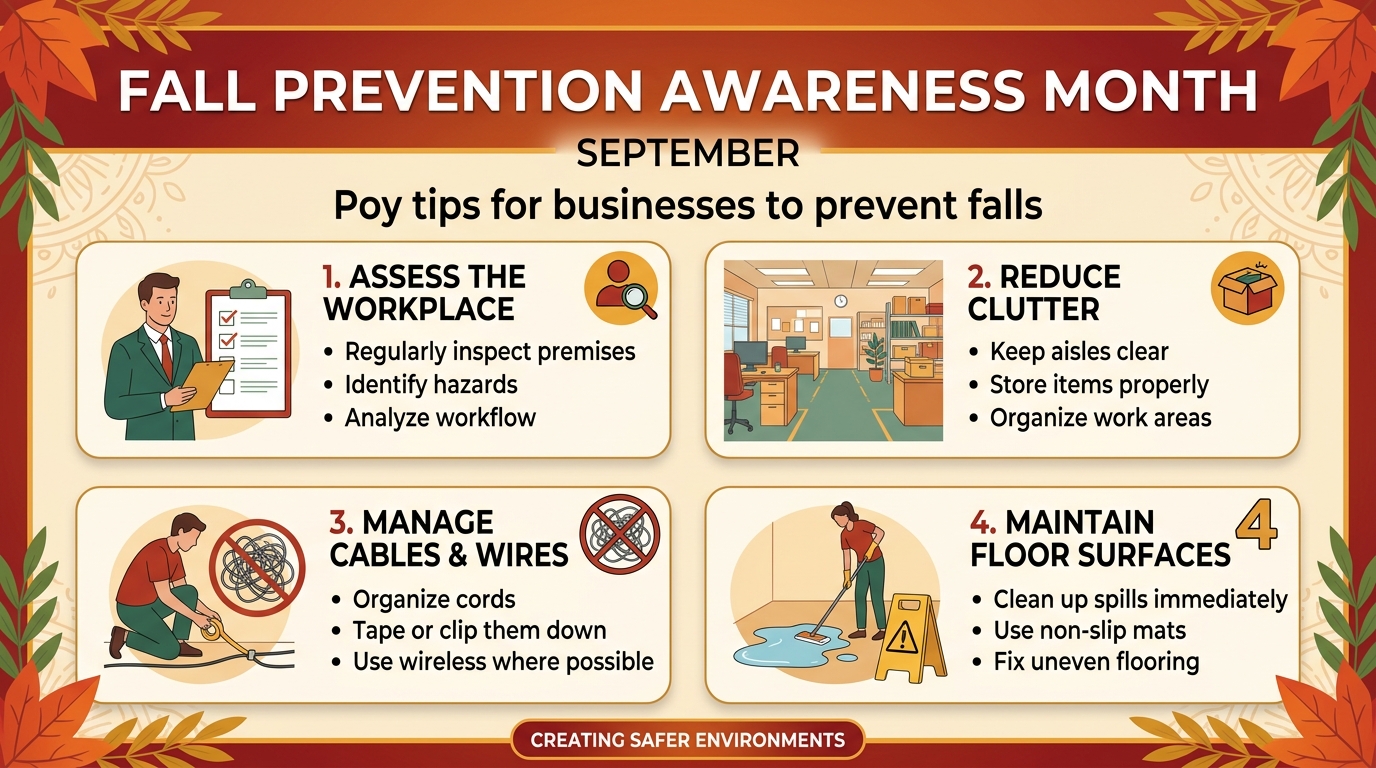
Fall Prevention Awareness Month - Sept. - Tips for Businesses
Quick Summary: September’s Fall Prevention Awareness Month is a valuable time for businesses to review the everyday conditions that can lead to slip, trip, and fall injuries. Tatum Law Firm PLLC encourages business owners to take a proactive approach by maintaining clear walkways, addressing wet surfaces, improving lighting, inspecting exterior areas, and reinforcing employee safety practices. Small, consistent actions can help protect employees, customers, vendors, and visitors while reducing unnecessary business disruptions.
Why Fall Prevention Deserves Business Attention
Slip, trip, and fall hazards can arise in virtually any business setting. Offices, retail locations, warehouses, healthcare facilities, restaurants, construction sites, and other workplaces may all face risks indoors and outdoors. Because people move through these spaces throughout the day, even a minor issue can create the conditions for a serious injury.
Many of these incidents are avoidable. A cord crossing a pathway, an unmarked wet floor, uneven pavement, or limited visibility on a stairwell can be easy to overlook until someone is hurt. Recognizing these hazards early gives businesses an opportunity to correct them before they affect an employee, customer, delivery professional, or other visitor.
The effects of a fall-related incident can extend beyond the immediate injury. A business may face lost productivity, interruptions to normal operations, workers’ compensation concerns, potential liability, and other unexpected consequences. Taking practical steps to prevent accidents supports both the people on the property and the continuity of the business.
Keep Paths, Work Areas, and Common Spaces Organized
Orderly workplaces are an important part of slip, trip, and fall prevention. Hallways crowded with supplies, equipment left in walkways, unsecured cords, and damaged or uneven flooring can all create risks for people moving through the property.
Businesses can set clear expectations for employees to keep individual work areas neat and shared spaces free from obstructions. When housekeeping becomes part of the daily routine, safety is more likely to remain a consistent priority rather than a concern addressed only after an incident occurs.
Regular walkthroughs are also helpful for spotting conditions that may otherwise go unnoticed. By routinely checking paths of travel and high-traffic areas, businesses can identify and address hazards before they contribute to an accident.
Respond Quickly to Wet or Slippery Floors
Wet surfaces are a frequent cause of slip-related injuries. Spills, rain tracked in through entrances, and recently mopped floors can quickly become dangerous when they are not handled promptly.
Simple measures can make a meaningful difference. Absorbent mats near entryways, visible warning signs during cleaning, and clearly understood spill-response procedures help reduce exposure to slippery conditions. These steps also make people aware of a potential hazard while cleanup is underway.
Seasonal weather deserves added attention. Rain and other changing weather conditions can affect entrances, sidewalks, and heavily used exterior areas, where moisture may collect and increase the chance of a fall.
Review Lighting Across the Property
Good visibility is essential to preventing falls. When employees and visitors cannot clearly see where they are walking, they may miss obstacles, surface changes, steps, or other hazards in their path.
Businesses should assess lighting both inside and outside the property. Hallways, stairwells, building entrances, parking areas, loading zones, and other frequently traveled spaces should have adequate illumination so people can navigate them safely.
Lighting can become especially important as daylight hours decrease later in the year. Replacing burned-out bulbs and correcting faulty fixtures can help improve visibility and reduce preventable risks for everyone who uses the property.
Do Not Overlook Outdoor Fall Hazards
Fall prevention does not end at the building’s doors. Exterior spaces require regular maintenance because sidewalks, parking lots, entryways, and walkways can develop hazards that affect employees and visitors alike.
Cracked concrete, uneven pavement, loose handrails, and wet seasonal debris such as leaves can all lead to slips or trips. Routine inspections of outdoor areas can help businesses identify where repair, cleanup, or other maintenance may be needed.
Addressing exterior concerns without unnecessary delay can improve the safety of the property and may help reduce liability concerns connected with avoidable accidents. Tatum Law Firm PLLC recognizes that attentive property maintenance can be an important part of a broader risk-management approach.
Prioritize Safe Use of Ladders and Elevated Equipment
Some businesses face additional fall risks when employees work above ground level or rely on equipment such as ladders, scaffolding, or elevated platforms. These situations require careful attention because a fall from height can result in severe injuries.
Regular inspections are essential. Equipment that is damaged, unstable, or otherwise defective should be removed from use promptly. Employees should also receive appropriate training before using ladders or performing work at elevated heights.
When businesses maintain equipment properly and ensure workers understand safe operating practices, they can lower the likelihood of fall-related incidents. Preventive maintenance and employee awareness work best when they are treated as ongoing responsibilities.
Encourage Footwear That Fits the Work Environment
Appropriate footwear can provide another layer of protection in workplaces where floors may become wet, oily, or slick during normal operations. While footwear cannot remove every hazard, it can help improve traction in the right setting.
Employees should wear shoes that suit their duties and the conditions they encounter at work. In healthcare, hospitality, food service, warehousing, and similar environments, slip-resistant footwear may help reduce the chance of losing footing.
Footwear is most effective when paired with the other elements of a strong fall prevention strategy, including clean work areas, timely spill response, adequate lighting, and consistent hazard reporting.
Make Fall Prevention Training Part of the Culture
Employee education is one of the most valuable tools available to businesses seeking to prevent slips, trips, and falls. Workers who understand common hazards are better prepared to recognize unsafe conditions and take appropriate action before an injury occurs.
New employees can be particularly vulnerable during their first year because they are still becoming familiar with workplace procedures and expectations. Thorough onboarding and continuing safety education can help employees understand how to move safely through the work environment and when to report a concern.
Training can cover hazard recognition, spill response, safe walking habits, ladder safety, proper equipment use, and reporting procedures. Periodic reminders and safety discussions can keep these issues visible throughout the year rather than limiting them to a single awareness month.
Build a More Proactive Safety Approach
Fall Prevention Awareness Month is a useful reminder that workplace safety needs regular attention. By focusing on housekeeping, maintenance, lighting, exterior inspections, safe equipment practices, suitable footwear, and employee training, businesses can take practical steps to reduce slip, trip, and fall risks.
A thoughtful prevention plan helps protect the people who work at and visit a business while supporting smoother day-to-day operations. Tatum Law Firm PLLC understands that safety concerns and potential legal issues can be stressful for business owners. For guidance related to workplace safety, risk management, insurance considerations, or legal concerns involving slip-and-fall prevention, contact our team for support.