Are Personal Injury Settlements Taxable?
Quick Summary: A personal injury settlement is not automatically taxable or tax-free. In many cases, compensation tied directly to a physical injury or illness is excluded from federal income tax, while other amounts—such as punitive damages and interest—may be taxable. Tatum Law Firm PLLC helps injured individuals understand the legal issues surrounding their claims, including the categories of compensation that may affect their financial recovery.
Receiving a personal injury settlement can bring meaningful relief after an accident or other injury caused by another person’s negligence. Once a claim is resolved, however, many people have an important follow-up question: Will the settlement create a tax obligation?
The answer depends on why each part of the payment was made. Federal tax treatment is generally based on the purpose of the compensation, not simply on the fact that it came from a personal injury claim. As a result, different portions of the same settlement may be treated differently.
At Tatum Law Firm PLLC, we believe clients should have a clear understanding of the issues that can affect their recovery. While a qualified tax professional can provide advice about an individual tax return, understanding the basic distinctions can help you ask the right questions as your personal injury claim moves forward.
Physical Injury Compensation Is Commonly Excluded From Taxes
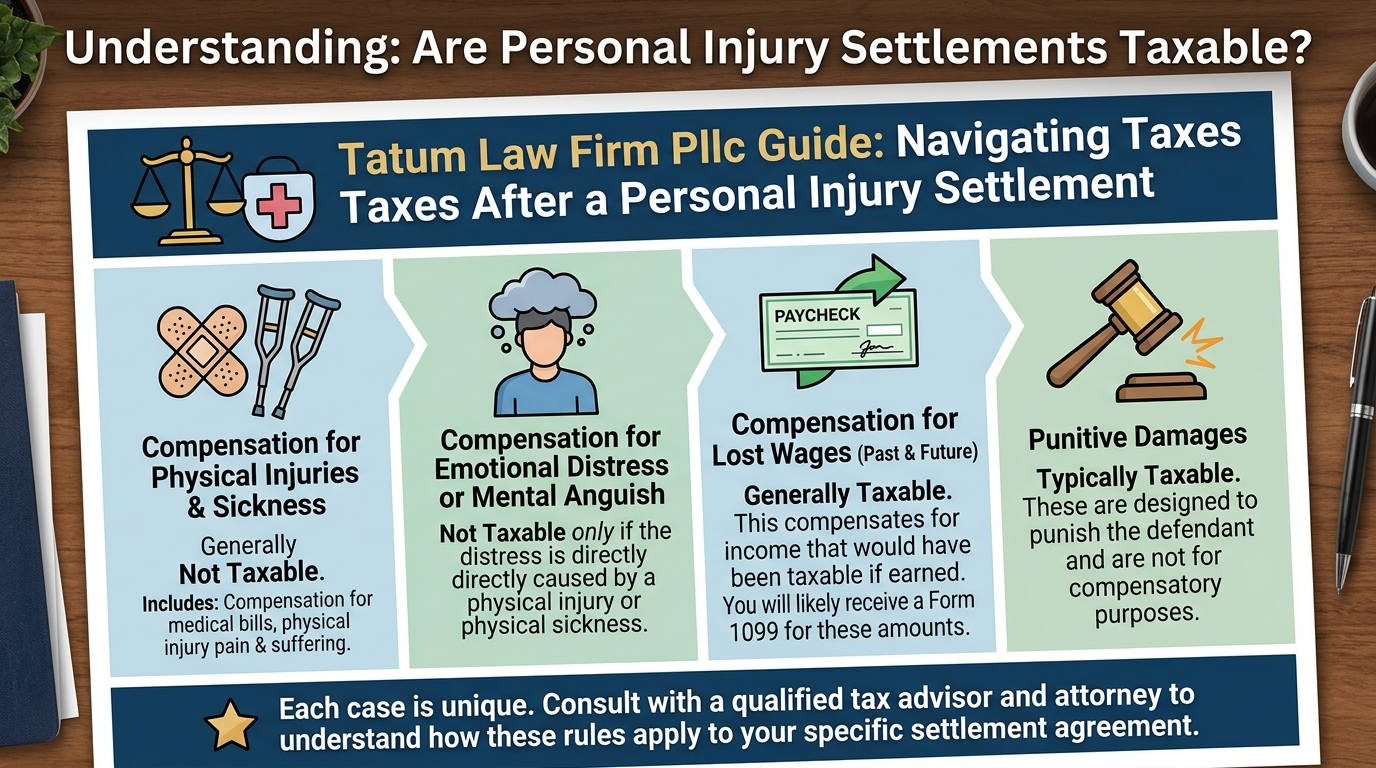
Compensation paid because of a physical injury or physical illness is often not included in taxable income. This can include damages intended to address medical bills, physical pain, and other losses that directly resulted from bodily harm.
For example, if someone is injured in an accident and receives compensation for treatment and the physical effects of the injury, that portion of the recovery will generally receive favorable federal tax treatment. These payments are designed to compensate the injured person for a loss, rather than to provide additional income.
This general rule may apply whether the money is received through a negotiated settlement, a jury verdict, or a structured payment plan. Still, the particular facts of the case and the terms of the settlement agreement matter, so each recovery should be reviewed on its own terms.
Not All Personal Injury Damages Are Tax-Free
It is important not to assume that every dollar paid in a personal injury case is exempt from taxes. Certain forms of damages are treated differently because they serve a purpose other than reimbursing an injured person for a physical loss.
Punitive damages are a common example. Rather than compensating an injured person for medical expenses, pain, or other harm, punitive damages are intended to punish especially wrongful conduct and discourage similar conduct in the future.
Because punitive damages are not meant to make the injured person whole, they are generally considered taxable income. When reviewing a settlement, it can be helpful to understand how the payment is allocated so that potentially taxable amounts are not overlooked.
Settlement Interest Is Usually Taxable Income
Interest is another part of a settlement or judgment that can create confusion. In some situations, interest accumulates before a settlement or court award is paid.
Even when the underlying compensation is largely excluded from taxable income because it relates to physical injuries, the interest portion is generally taxable. The Internal Revenue Service typically distinguishes interest from the amount paid for the injury itself.
This is why it is important to look beyond the total settlement amount. Two payments received at the same time may have different tax treatment depending on whether they represent injury compensation, interest, or another category of damages.
Emotional Distress Damages Require Careful Review
Compensation for emotional distress can be more complicated. The tax treatment often turns on whether the emotional suffering is connected to a physical injury or physical illness.
When emotional distress arises from a bodily injury, that compensation may be treated similarly to the physical injury damages. For instance, emotional trauma following a serious accident may be excluded from taxable income when it is directly tied to the physical harm the person suffered.
On the other hand, emotional distress damages that are not connected to a physical injury may be taxable. The details of the claim, the evidence, and the way the settlement is described can all be relevant to determining how that payment should be treated.
Prior Medical Deductions Can Change the Analysis
Medical expense deductions taken in earlier tax years can also affect a personal injury settlement. This issue may arise when an injured person deducted medical expenses on a prior tax return and later receives settlement funds that reimburse those same expenses.
In that situation, some of the reimbursement may need to be reported as income. The rule is intended to prevent a person from receiving both a tax deduction and tax-free repayment for the same medical costs.
Anyone who previously claimed injury-related medical deductions should keep that history in mind when evaluating a settlement. It is another reason to carefully review the nature of each payment instead of treating the entire recovery as a single category.
Settlement Language Can Matter
Every personal injury claim has its own facts. The tax consequences of a settlement can depend on the type of claim, the purpose of the damages, whether interest was included, and whether prior deductions were claimed.
The wording of the settlement agreement may also be important. Clearly identifying what each portion of the payment is intended to compensate for can help establish how the recovery should be characterized.
There is no one-size-fits-all answer to the question, “Are personal injury settlements taxable?” Compensation for physical injuries is often excluded from federal income tax, but exceptions can apply based on the circumstances surrounding the claim and the settlement itself.
Discuss Your Personal Injury Claim With Tatum Law Firm PLLC
If you were injured because of another person’s negligence, Tatum Law Firm PLLC can help you explore your legal options. Our team can explain the types of compensation that may be available and help you better understand the legal issues involved in pursuing a personal injury claim.
Although tax treatment should be discussed with a qualified tax professional, experienced legal guidance can help you understand the nature of your claim and the compensation you may be seeking. Contact Tatum Law Firm PLLC to discuss your situation and the next steps toward pursuing your recovery.