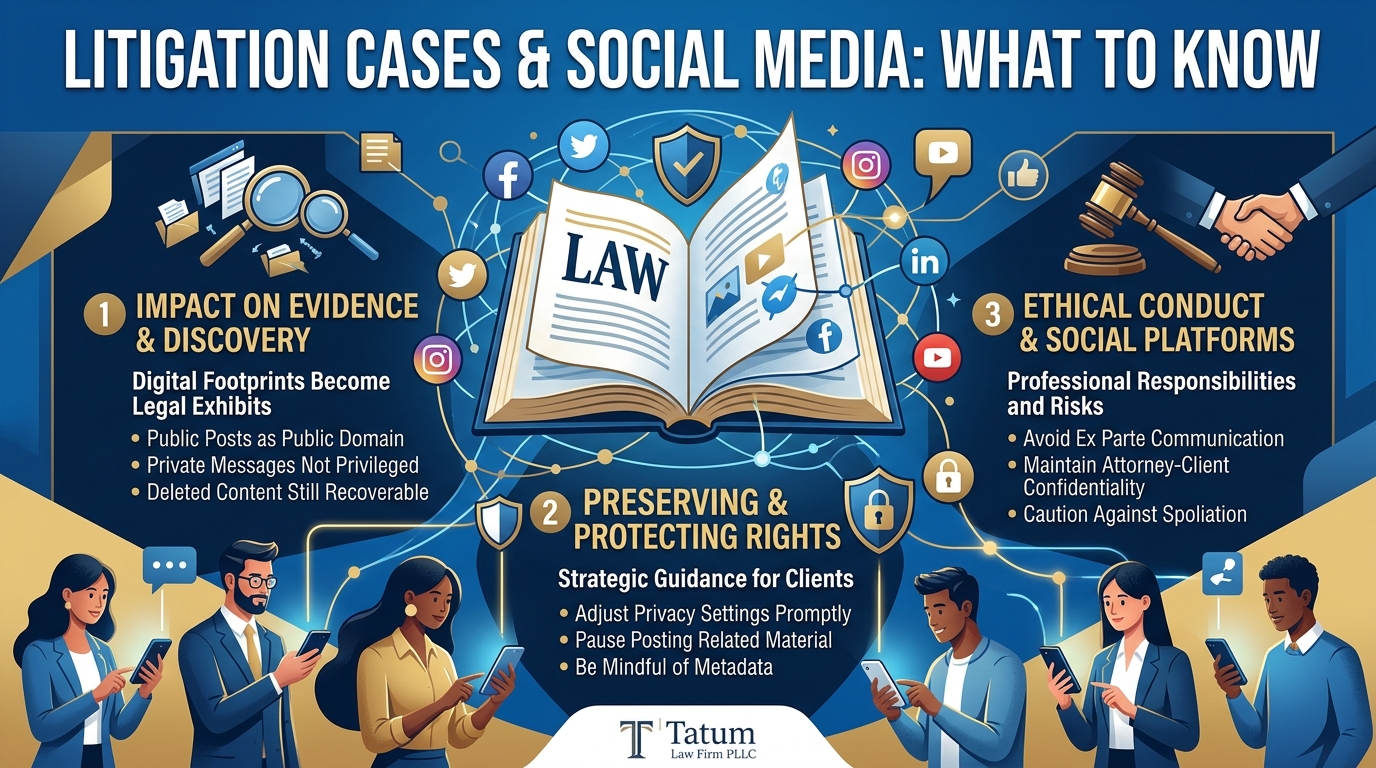
Litigation Cases and Social Media: What To Know
Quick Summary: Social media can play an important role in an active lawsuit, even when a post, photo, comment, or reaction seems unrelated to the dispute. Tatum Law Firm Pllc encourages clients involved in litigation to approach their online activity carefully, preserve potentially relevant content, and discuss social media questions with their legal team before making changes to an account.
For many people, social media is simply part of daily life. Posting a photo, reacting to a friend’s update, checking in at a location, or leaving a comment may feel routine and separate from a legal matter. However, when litigation is pending, those everyday online interactions can take on added significance.
At Tatum Law Firm Pllc, we help clients understand that social media and litigation are not always separate issues. Publicly available posts may be reviewed by the other side, and content connected to the claims or defenses in a case may become relevant during discovery.
This does not mean you must assume every online action will damage your case. It does mean that a thoughtful approach to social media can help prevent avoidable issues while a lawsuit is underway.
Social Media May Be Used as Evidence
During litigation, online content can potentially be offered as evidence if it relates to an issue in the case. A social media post does not have to mention the lawsuit directly to receive attention from opposing counsel.
Relevant material may include more than traditional posts. Photos, videos, captions, status updates, comments, location check-ins, and reactions to someone else’s content can all contribute to a person’s digital footprint. Depending on the facts of the dispute, that material may be examined for information concerning an injury, emotional distress, activities, or differing accounts of an event.
A post shared with no connection to the lawsuit in mind can still be interpreted differently by someone reviewing it later. For example, a casual photograph may be used in an attempt to challenge a statement made in connection with a civil case, regardless of the context behind the image.
That is why it is useful to consider not only what you intended to communicate online, but also how another person could interpret it in the setting of litigation. What looks ordinary in a social media feed may be viewed through a very different lens when it is presented as potential evidence.
Discovery Requests for Social Media Are Not Unlimited
An active lawsuit does not automatically give the opposing side complete access to every item you have ever shared online. Courts generally expect social media discovery requests to be connected to information that is relevant to the claims and issues involved in the case.
Put differently, a litigant’s full social media history is not automatically open for review. Requests should generally be targeted rather than broad demands for every message, image, comment, or account record associated with a person.
Even so, relevant social media evidence may still be discoverable. When a party places a physical condition, emotional condition, or another disputed matter at issue, online content that directly addresses that subject may become part of a discovery request.
The distinction matters. Social media accounts are not automatically an unrestricted source of information simply because litigation has begun. At the same time, it is risky to assume that online content is wholly separate from the legal process or automatically protected from review.
Why Deleting Posts Can Lead to Additional Concerns
After learning that social media could be relevant to a lawsuit, it may be tempting to remove older posts, photos, or comments. But deleting content during litigation can create concerns that are separate from the substance of the original post.
First, taking something down does not necessarily erase it. Digital content may remain available through screenshots, shared copies, archived material, or other sources, even after it is removed from the original account.
More importantly, litigation can create duties to preserve information. Deleting or altering social media content that should have been retained may lead to allegations that evidence was not properly preserved and, in some circumstances, may result in sanctions.
Rather than deciding independently that a particular post should be removed, speak with your attorney first. Tatum Law Firm Pllc can help clients consider how preservation obligations, including a possible litigation hold, may apply to the facts of their particular case.
Use Extra Care Before Posting During a Lawsuit
For many people, the most practical approach during active litigation is to pause or limit new social media activity until they have discussed the situation with their legal team. There is no universal rule for every case, but caution can reduce the chance of creating new material that leads to unnecessary questions.
It can be difficult to predict how someone else will characterize a post. An update that seems harmless, personal, or unrelated when it is shared may later be examined in a way that differs from the poster’s intended meaning.
The same principle applies to interactions beyond posting. Comments, likes, reactions, check-ins, and other engagement all add to an online presence. Taking a moment to consider those actions before engaging can be just as important as thinking carefully before publishing an original post.
Limiting social media use is not an admission that online activity will hurt a case. It is a practical measure that can help keep an ongoing dispute from becoming more complicated than necessary.
Managing Your Online Presence During Litigation
Because social media is woven into everyday communication, it is understandable that people may not immediately connect a routine online habit with a legal dispute. Once litigation begins, however, it is wise to treat your digital presence with the same care you would give other information related to your case.
Keep these principles in mind:
- Online posts and interactions may potentially become evidence.
- Social media content that is relevant to the dispute may be sought through discovery.
- Deleting existing content is not a dependable solution and may create preservation concerns.
- Decisions about posting, preserving, or changing social media content should be discussed in light of the facts of your specific case.
The purpose of this guidance is not to make you worry about every photo or comment you have ever shared. It is to help you avoid having an unintended online interaction complicate an otherwise separate legal matter.
If you have questions about social media discovery, preserving online content, or how your accounts could affect an active lawsuit, contact Tatum Law Firm Pllc. Our team can discuss your circumstances and help you understand the steps that may be appropriate while your litigation is pending.